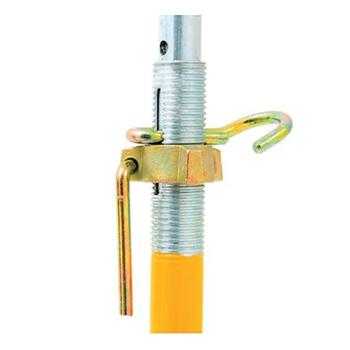
How To Use Acrow Props
If you need a set of scaffolds and supports that are adjustable and extremely strong for supporting vertical loads – such as a horizontal beam that is having its supports removed – acrow props are perfect for the job.
But if you’ve never used an Acrow prop before, you may not know where to start – or how to use them properly. In this guide, Australian Scaffold will go over the essential tips you need to know and give you a step-by-step guide on using Acrow props.
NOTE: The advice in this article is generalized, and it should not be your only guide to using Acrow props. Always consult with a structural engineer to ensure you’re using the proper support for your project and follow all applicable construction safety best practices.
A Brief Overview
An Acrow prop, also known as a jack post, is a type of vertical support first invented by Swiss-born William de Vigier. De Viger moved to London in 1935 and invented this adjustable Acrow prop vertical support.
Previously, builders used timber supports, which had to be custom-cut and built for each project.
In contrast, Acrow props are vertical support that uses heavy-duty screw threads and an adjustable pin to provide stable, reliable support for loads of up to 3,300 kgs or more.
British builder Sir Robert McAlpine popularized these props, and today, they’re still one of the best choices for the vertical support of heavy loads when building or shoring up structures.


-
Choose The Right Size
The first thing you’ll need to do is choose the right size and to support the load of your structure. The most common sizes are:
- Size 0.7 – 0.45 metres to 0.70 metres. Max load: 3,300 kgs
- Size 1.2 – 0.7 metres to 1.2 metres. Max load: 2,540 kgs
- Size 2.1 – 1.2 metres to 2.1 metres. Max load: 2,340 kgs
- Size 3.2 – 2.1 metres to 3.2 metres. Max load: 2,010 kgs
- Size 4.5 – 3.2 metres to 4.5 metres. Max load: 1,300 kgs
- Size 5.6 – 4.5 metres to 5.6 metres. Max load: 900 kgs
-
Make Sure You Know How Much Support You Need
Make sure that you understand how much weight you have to support. Underestimating can lead to dangerous situations – or the cascading failure of the entire structure.
Do your due diligence and consult with engineers and experts to ensure you have all the support you need – it’s often best to use a few more Acrow props than you need to ensure that you have extra support in case you need it.
-
Choose A Solid Base – Make Sure It Can Hold The Load
A concrete pad is an ideal material for Acrow props. Working on a timber floor or another type of floor may not be the best choice – consult a structural engineer to ensure it’s safe.
Steel or hardwood sole plates are often used with Acrow props to ensure the load is more evenly distributed.
-
Make Sure The Acrow Props Are Plumb
Acrow props are not designed for horizontal loads. If your Acrow prop is more than 1.5° out of plumb, it’s unsafe. Make sure that you can set your props up in a perfectly vertical position.
-
Use Needles And Strongboys, If Necessary
If you’re propping up a beam or another structure that can be supported directly by the Acrow prop from below, you won’t need needles or strongboys.
Strongboys and needles are usually used for masonry. They’re slightly different, but the same process is used for each. You remove some of the mortar and bricks from the structure, providing a gap through which the timber needle (a strong, specialized timber support) or strong boy (a metal plate support) can be run.
Then, the timber needle or strongboy is supported by the Acrow prop, allowing the load-bearing structure below to be disassembled.
-
Brace Your Props And Check Them Regularly
Since they do not have great horizontal stability, it’s best to use “lacing” and scaffolding poles to attach them together. This helps increase their stability and load capacity.
You also need to check all of your props regularly to ensure that they are stable, have not wiggled loose, and are not more than 1.5° out of plumb.
Know-How To Use – With This Guide!
In addition, Acrow props are a powerful tool for builders and construction companies of all sizes, and at Australian Scaffold, we have a great selection of high-quality Acrow props, perfect for any job.
If you have any more questions, or you’d like to consult with one of our scaffolding experts to learn more, please call us now at 1300 919 905 or contact us online for more information.
Latest News
Other Publications
Contact Us
Please get in touch with Daniel Butlin at 1300 919 905 or email daniel.butlin@australianscaffolds.com.au for further information. You can visit us and check out our scaffold and edge protection systems.