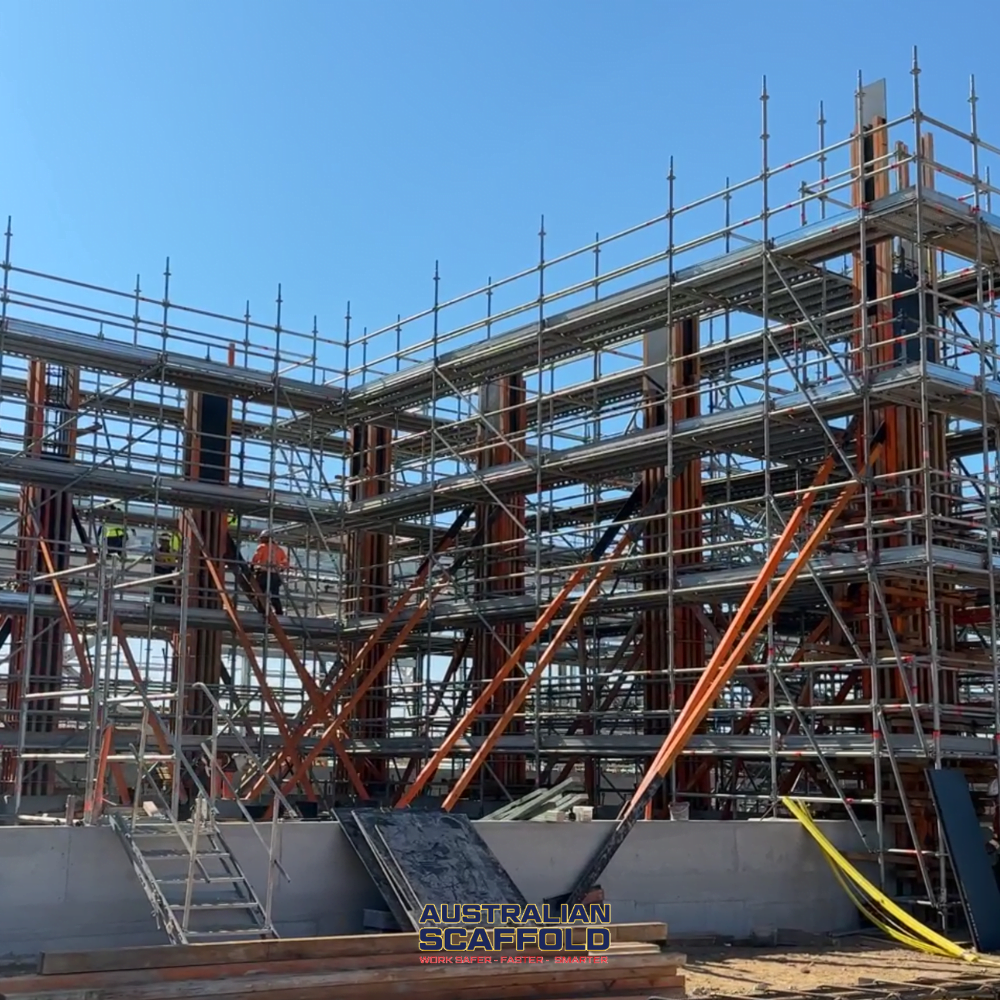
When is Double Scaffolding Used?
There are many different types of scaffolding used in construction and maintenance jobs. So, when is double scaffolding used?
From suspended scaffolding and single scaffolding to trestle scaffolding which is supported on movable ladders. Cantilever scaffolding which uses a series of needles for support, and brick layer scaffolding, it’s often hard to know which type is right for you.
But if you’re wondering what double scaffolding is and how it’s used, you’re in the right place. In this article, we’ll discuss everything that you need to know about this unique type of scaffolding, which is typically used for stone masonry and brick masonry.
What Is Double Scaffolding And When Is It Used?
To understand when double scaffolding is used, let’s start by defining single scaffolding. Traditional, single scaffolding is often used to work on brick-based walls and projects, which is why it’s sometimes called “bricklayers” scaffolding.
Single scaffolding uses one row of “putlogs”, which are put directly into the wall, and used to support ledgers and standards at a distance of about 1.2 metres from the wall. The distance between each standard is usually between 2-2.5 metres, and ledgers are used to join the standards at distances with gaps of between 1.2-1.5 metres.
While this is effective for softer brick walls, single scaffolds are not as useful for stone masonry. Instead, Double scaffolding is used for stone masonry – hence the name “mason’s scaffolding.” It’s used to support large stone structures.
Unlike traditional scaffolding, large putlogs aren’t used to provide support for scaffolding, and are not placed directly into the wall.This is because supporting putlogs properly is difficult when working in a hard stone wall. It’s often hard to make a hole large enough to support scaffolding.
Double scaffolding
Instead of using traditional supporting putlogs, then, double scaffolding uses two rows of steel scaffolding to make it strong and durable. The first row is built approximately 20-30 centimetres away from the wall. A second row of holes in the wall is placed at a vertical interval, about 1 metre away from the first row. Usually, steel tubes are used, but other types of scaffolding can also be used to build a working platform.
Then, a series of small putlogs are placed and supported by both of these frames, parallel to the wall, resting on both rows of scaffolding. After this, both cross braces and strong rakers are attached to lend even more structure and support to the frame and ensure that it’s strong and durable. Another term often used to refer to double scaffolding is “independent scaffolding.”
Double scaffolding has a number of benefits for workers. First, it’s very secure, given the fact that two rows of scaffolding are used, and the putlogs are supported very safely. Therefore, it also does not require any holes in the support structure, which leads to less repair work and cleanup when the job is done.
Furthermore, double scaffolding is used for just about any construction works project where large, traditional putlogs are not enough to support the structure, and building a free-standing scaffolding structure is not desirable.
For instance, an example would be when working on the restoration of a historic church that uses stone masonry walls – double scaffolding can be used to build a strong support structure around the area that is being repaired without the added expense and inconvenience of building a scaffold all around the church.
Our Guarantees
- Provide after sales service
- Treat all customers with respect
- Stand behind the quality of our products
- Formulate solutions to any work related problem
Service Areas Include:
- Greater Sydney
- Sydney CBD
- Blue Mountains
- Eastern Suburbs
- Greater Western Sydney
- Hills District
Latest News
Related Topics
A History Of Australian Scaffolds – What We Do
Additionally, at Australian Scaffolds, we’re experts at the design and installation of any type of scaffolds. From single scaffolds to masonry scaffolds, suspended and cantilever scaffolds, and more. We also sell scaffolding materials and equipment, and we’ve been serving our customers in New South Wales for years.
Whether you’re looking to hire out scaffolding, or purchase your own scaffolding products and materials, we’re here to help. With a great track record and years of satisfied customers, you can trust us to take care of your every need in New South Wales and the surrounding areas.
Contact Us
Please get in touch with Australian Scaffolds on 1300 919 905 for further information. You can visit us and check out our scaffold and edge protection systems.